Restoring Constitutional Balance After Years of Executive Overreach
California Family Council is proud to support AB 1835, authored by Assemblyman James Gallagher (R–Yuba City), a vital reform that would restore legislative oversight and constitutional balance to the Governor’s emergency powers.
After the unprecedented, and in many cases unlawful, exercise of executive authority during the COVID-19 crisis, AB 1835 represents a necessary corrective to ensure that no governor can again rule indefinitely by decree.
The Problem: Endless Emergency Rule
Under the California Emergency Services Act (CESA), the Governor may declare a State of Emergency (SOE) and exercise sweeping powers over state agencies. During COVID-19, Governor Gavin Newsom used these authorities to issue far-reaching mandates, including:
- Statewide church closures
- Worship bans and singing prohibitions
- Vaccine and masking mandates
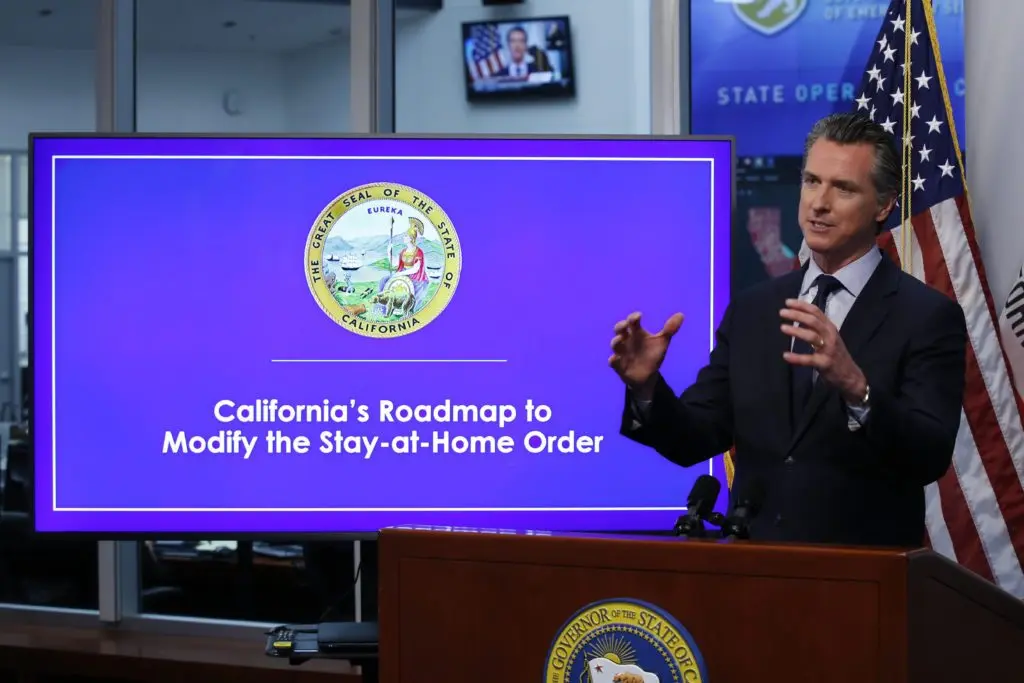
- Stay-at-home orders
- No-bid emergency contracts
- Suspension and attempted amendment of statutory law
While emergency powers are meant to be temporary tools for genuine crises, California’s COVID-19 State of Emergency lasted three years, extended five separate times by Governor Newsom without meaningful legislative reauthorization.
In practice, California functioned under executive rule with little accountability.
Although the Legislature technically retains the authority to terminate a State of Emergency through a concurrent resolution (Gov. Code § 8629), there is currently no requirement that lawmakers actively review or reauthorize prolonged emergency declarations.
In other words, the Governor can continue emergency powers indefinitely unless the Legislature musters the political will to stop him.
That is not how constitutional government is supposed to function.
Churches Singled Out and Silenced
For California’s churches, the abuse of emergency authority was not theoretical; it was painfully real.
Churches were deemed “non-essential” while abortion facilities and marijuana dispensaries remained open. Worship services were prohibited. Singing in church was banned. Pastors were threatened with fines. Some congregations faced ongoing harassment simply for gathering to worship.
Ultimately, it was not the Legislature that reined in these unconstitutional actions; it was the courts.
The U.S. Supreme Court repeatedly rebuked Governor Newsom’s restrictions on churches. California churches won settlements and legal victories after months of costly litigation. In one ruling, the Sutter County Superior Court found that the Governor had acted unconstitutionally when he attempted to amend statutory law under emergency authority.
But the damage was done.
As we reported throughout the pandemic, pastors were forced to choose between obeying God and obeying the Governor. Some, like Calvary Chapel San Jose’s Pastor Mike McClure, endured prolonged legal battles for simply keeping their churches open.
Scripture reminds us that civil government is ordained by God (Romans 13), but it is not absolute. Government authority is limited, delegated, and accountable. When those limits are erased, liberty suffers.
California Is an Outlier
A 2025 report by the Legislative Analyst’s Office, titled Improving Legislative Oversight of Emergency Authorities, confirmed what many Californians experienced firsthand: current emergency law cedes more power to the Governor than necessary and provides inadequate oversight mechanisms.
The report noted:
- Broad emergency spending authority with minimal checks
- No formal process ensuring powers return promptly to the Legislature
- Prolonged emergencies extending beyond what is necessary
Even more striking, California is an outlier nationally. Thirty-six other states limit the duration of emergency declarations, requiring renewal by either the Governor or the Legislature after periods ranging from 15 days to six months.
California stands virtually alone in allowing open-ended emergency rule.
That is not a sign of prudence—it is a sign of imbalance.
The Solution: AB 1835
AB 1835 provides a straightforward and reasonable reform.
The bill would:
- Automatically terminate a State of Emergency after 90 days unless the Legislature affirmatively votes to extend it by concurrent resolution.
- Clarify that the Governor’s authority under CESA includes “executive power,” not the broader and constitutionally problematic term “police power.”
- Make clear that while the Governor may suspend statutes temporarily during an emergency, he may not amend or create new statutes, authority reserved exclusively to the Legislature under the California Constitution.
This reform does not prevent a Governor from acting swiftly in the early stages of a wildfire, earthquake, pandemic, or other genuine emergency.
It simply ensures that prolonged exercises of extraordinary authority must be reviewed and approved by the people’s elected representatives.
In short, AB 1835 restores checks and balances.
CFC’s Support
In a letter to Assemblyman Gallagher, California Family Council expressed strong support for AB 1835 on behalf of tens of thousands of constituents and more than 2,000 churches across California.
“California’s Emergency Services Act was designed to give the Governor temporary authority to respond swiftly to genuine crises,” the letter explains. “However, under Governor Gavin Newsom, emergency declarations… remained in place for extended and indefinite periods. This concentration of extraordinary powers in the executive branch bypassed meaningful legislative participation and undermined the system of checks and balances.”
Greg Burt, Vice President of California Family Council, emphasized why reform is necessary:
“During COVID, the Governor claimed near-total authority over California, sidelining the Legislature and silencing churches. Pastors were fined. Worship was banned. Meanwhile, abortion clinics stayed open. That is not constitutional government; that is executive overreach. AB 1835 restores the proper balance by ensuring that emergency powers remain temporary and accountable.”