

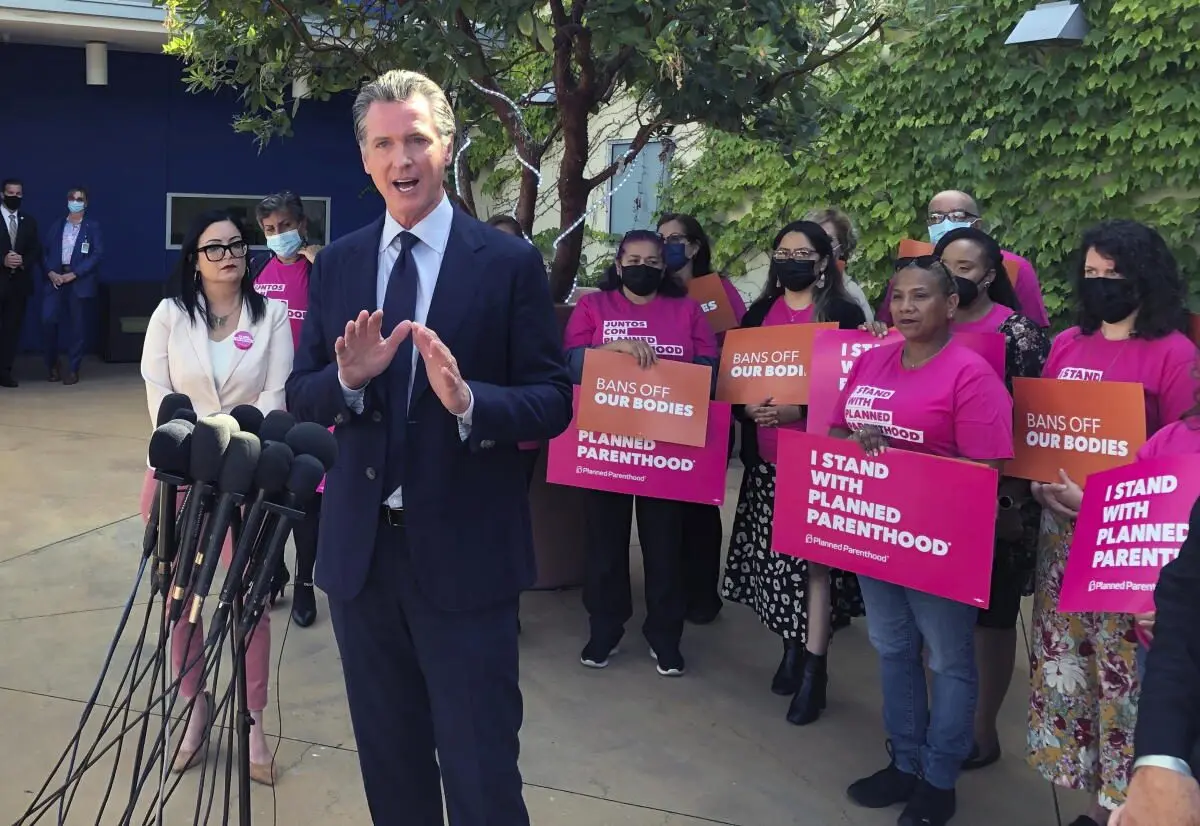
Newsom Just Made Nearly Every Employer a Hate Speech Instructor

AB 1803 AB 1578 10-08-26
Every employer in California with five or more employees, public or private, for-profit or nonprofit, will soon have to teach its workers what the state calls hate. So will every elected official from the Capitol to the local school board. On September 27, 2026, Governor Gavin Newsom signed two bills that California Family Council fought all year, turning a vague and politically loaded term into a mandatory training requirement.
AB 1803, by Assembly Speaker pro Tempore Josh Lowenthal (D-Long Beach), folds “anti-hate speech” instruction into the sexual harassment training every employer with five or more workers must already provide. It does not add a separate course or raise the existing minimums of one hour for employees and two hours for supervisors. AB 1578, by Assemblymember Corey Jackson (D-Moreno Valley), covers elected officials. Both mandates begin January 1, 2028.
AB 1578 changed more than once on its way to the governor. As introduced in January, it required a stand-alone hour of “anti-hate speech” training every four years. By the time CFC opposed it in April, it had been amended to fold that training into the sexual harassment course officials already take. The final law splits the mandate. Paid local elected officials, such as city council members, county supervisors, and school board trustees, get “anti-hate speech” training as a component of their existing harassment training. State elected officials get something different: a separate course “on responding to hate,” at least one hour within six months of taking office and every two years after, using training the Civil Rights Department develops or a course their agency creates.
Together, the two laws reach from the State Capitol down to the smallest family business. Neither one defines “hate speech.” Instead, they hand that job to the state and to whoever writes the curriculum.
The same “employer” that already must teach gender ideology
AB 1803 does not create a new list of covered businesses. It plugs hate speech training into Government Code section 12950.1, the same sexual harassment training statute CFC has reported on for months. That statute defines “employer” as “any person regularly employing five or more persons or regularly receiving the services of five or more persons providing services pursuant to a contract,” along with the state and every city, county, and political subdivision.
That definition is wide. A company with five workers anywhere in the country must train even one employee who lives in California. Independent contractors count toward the five. The statute never mentions churches, ministries, or religious nonprofits, and no court, Attorney General opinion, or Civil Rights Department guidance has settled whether the religious employer exemption in the Fair Employment and Housing Act reaches this training mandate.
CFC has already shown what that training looks like. The Civil Rights Department’s own supervisor and employee module tells trainees that using the wrong pronoun for a transgender identified person on purpose is harassment, as well as objecting to a coworker’s use of a restroom that does not match their sex. Dennis McCourt, a Christian employee of an out-of-state Bible software company, refused to click through slides that required him to affirm those claims. “You could put a gun to my head. I won’t do it,” he told CFC.
Now the state will layer hate speech instruction on top of that same course, delivered to the same workers, every two years.
Hate, as defined by Sacramento
When Lowenthal first presented AB 1803 in March, he admitted the bill had no definition of hate speech. The final law still has none. Instead, it orders training on how to recognize, report, and confront workplace speech that “vilifies, humiliates, or incites hatred” against people based on protected characteristics, a list that includes sex, gender identity, gender expression, and sexual orientation.
None of those three verbs has a settled legal meaning. The free speech group FIRE warned that this language fails to separate protected expression from unlawful conduct. The U.S. Supreme Court held in Matal v. Tam (2017) that the First Amendment has no hate speech exception. So who decides when a coworker feels humiliated by the statement that God made us male and female?
The rest of the world offers a preview. Finland prosecuted Member of Parliament Päivi Räsänen for years, and its Supreme Court ultimately convicted her over a 2004 church pamphlet on biblical sexual ethics. This June, Canada enacted its Combatting Hate Act, which repealed the long-standing defense for good-faith religious opinion in its hate propaganda law. Inside California, the Civil Rights Department already teaches that acting on a biblical view of sex can be harassment. Hate speech training is the next step on the same road.
Watch how they already use the word
Californians do not have to guess how the Legislature will apply this standard. Lawmakers have shown us at the microphone.
On April 1, 2025, as the Assembly killed a bill to keep boys out of girls’ sports, Assemblymember Rick Chavez Zbur (D-Los Angeles) said, “This is really reminiscent to me of what happened in Nazi Germany in the 1930s.” Zbur is also listed as a co-author of AB 1803.
On March 29, 2023, CFC Outreach Director Sophia Lorey testified before the Senate Health Committee against SB 59, which required tampons and other menstrual products in men’s restrooms in state buildings. “Males do not and cannot have a menstrual cycle,” she told the committee. What followed was a preview of how California now defines hate. Senator Scott Wiener (D-San Francisco) called the opponents “anti LGBTQ hate groups,” adding, “that’s what they are, let’s just be clear.” Then-Senator Melissa Hurtado (D-Bakersfield) said the opposition testimony reflected “hate” and “misinformation” and added, “I’m worried about people being harmed.” Senator Susan Rubio (D-Baldwin Park) said it came across as “just hateful.” The bill’s author, then-Senator Nancy Skinner (D-Berkeley), said the main opposition group was “motivated by a terrible bias and hatred towards our trans population.”
Four senators heard a biology lesson and called it hate. One said it could get people hurt.
Lawmakers will not write the training themselves. That job goes to the Civil Rights Department, the same agency whose harassment course already tells workers that objecting to a man in the women’s restroom is harassment. AB 1578 directs the department to develop or obtain an online course on responding to hate for state elected officials, and local officials may take it to meet their own requirement. For AB 1803, employers may hire private trainers, but the department’s free online course is the version the state offers every employer to satisfy the mandate. The agency that already treats biblical convictions about sex as misconduct now gets to decide what counts as hate.
This spring, a witness for Women Are Real told the Assembly Local Government Committee that Assemblymember Sharon Quirk-Silva accused her coalition of “spewing hate” for raising concerns about mixed-sex locker rooms.
And Lowenthal himself, according to girls who attended a CFC press conference in Long Beach, made an obscene gesture at the crowd of female athletes as he left. At the AB 1803 hearing, he did not deny being upset, saying his frustration was aimed at two Republican colleagues.
This is the Legislature that will now train itself, and every employer in the state, on what hate means. Under its standard, a teenage girl asking for her own locker room is spreading hate, and a legislator flipping off that girl is not.
CFC warned them
CFC testified against both bills at every turn. At the Assembly Labor and Employment Committee in March, Greg Burt, Vice President of California Family Council, told lawmakers, “You cannot regulate what you cannot define.” He warned that “unpopular religious beliefs about sexuality or gender are labeled as hate, and then groups like ours, who advocate for these viewpoints, are labeled as hate groups.” His conclusion: “That’s not training. That’s simply compelled indoctrination.”
A broad coalition agreed, including gender-critical feminists and lesbian advocacy groups. Meg Madden of CAUSE told the committee, “Even if there is only one person left on Earth who knows that sex is real, we must protect that person’s right to say that.”
The governor signed the bills anyway.
“Sacramento just gave itself the power to decide which convictions are hateful, and then ordered every employer in the state to teach that verdict,” Burt said. “Christians will not stop speaking the truth in love because a training module calls it vilification. We must obey God rather than men.”
Scripture calls believers to “speak the truth in love” (Ephesians 4:15). Truth spoken in love is not hate, no matter how many slides the state produces claiming otherwise.
What you can do
Christians do not have to wait until 2028. Since CFC first reported on the state’s harassment training, we have been working with attorneys to help Christian employees and employers request religious exemptions and accommodations from content that requires them to affirm gender ideology. Federal and state law both require employers to accommodate sincerely held religious beliefs unless doing so creates a genuine undue hardship.
Because AB 1803 does not create a new course, but adds hate speech instruction to that same harassment training, the same protocol applies. If you object to the gender identity content now, put your objection and your request for accommodation in writing, and do the same when the hate speech component arrives. Employers who share those convictions, including churches, Christian schools, and ministries with five or more employees, should talk with their own attorney now about whether the religious employer exemption covers them.
If you are an employee, employer, or pastor facing these trainings, contact CFC and we will help connect you with legal resources.